Window Stained Glass Mosaic Backgrounds: A Designer's Guide
There's a particular quality to light passing through stained glass. It's not just color; it's a transformed light, creating patterns that feel both structured and alive. This is the essence captured in digital assets like Window Stained Glass Mosaic Backgrounds. These are high-resolution, seamless patterns designed to emulate the intricate, luminous, and fragmented beauty of traditional glasswork. They offer a unique blend of geometric precision and organic, light-filled color, making them a versatile tool for a wide range of creative projects.
Understanding the Visual Language of Stained Glass Textures
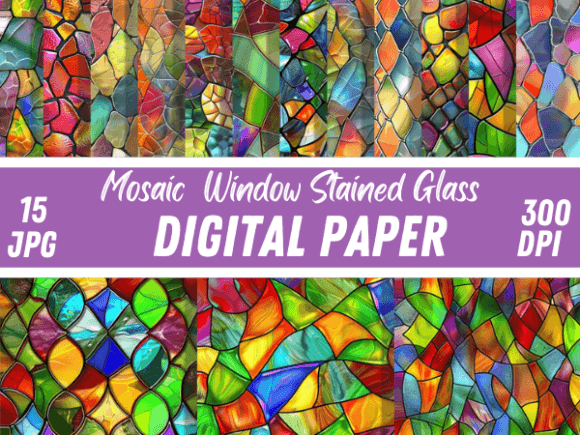
A stained glass mosaic design is more than just a pattern. It carries a distinct personality. The style is inherently ornate and artistic, yet the underlying tessellation provides a sense of order and rhythm. The visual appeal lies in the interplay between the translucent, luminous color fields and the dark, defining lines that separate them, much like the lead cames in a real window. This creates a powerful sense of depth and texture. The "Disco Funky" variation mentioned in some product listings pushes this further, injecting a vibrant, retro, and colorful energy into the traditional form, making it feel contemporary and bold. The overall effect is one of elegant, decorative craftsmanship that can evoke nostalgic, whimsical, or even modern moods depending on the color palette—be it soft pastels or a rich spectrum.
Where This Creative Asset Truly Shines
The practical applications for such a detailed and evocative pattern are extensive. As a design asset, its strength lies in projects where visual impact and texture are paramount.
- Branding & Identity: For businesses aiming for a brand identity that feels artistic, established, or creatively bold, this pattern can be transformative. Think of a boutique's logo backdrop, the header of a website for a craft studio, or the packaging for an artisanal product. It communicates a level of detailed care and artistic sensibility.
- Publishing & Editorial: In editorial design, these backgrounds work beautifully as chapter dividers, magazine cover accents, or as a textured background for pull quotes. For book cover design, particularly in genres like fantasy, historical fiction, or children's literature, it adds instant depth and intrigue.
- Print & Stationery: This is where the pattern excels. It's perfect for creating wrapping paper, greeting cards, invitations for weddings or birthday parties, and stationary. The seamless, repeatable nature makes it ideal for printable projects and digital papers. A Valentine's Day card with a stained glass heart motif or a Mothers Day design with floral elements gains a unique, handcrafted feel.
- Digital & Social Media: As a background for social media graphics, website banners, or digital ads, it stops the scroll. Its intricate detail and color make it highly engaging. It can serve as a stunning HD wallpaper or a unique background for video content.
- Crafting & DIY: The applications here are nearly endless. Use it for scrapbooking, junk journal backgrounds, planner decorations, or as a sublimation design for mugs, tumblers, and tote bags. It's also excellent for vinyl decals, iron-on transfers, and cut machine projects. For quilters or embroiderers, the pattern can inspire a fabric texture or a complex stitch design.
Making It Work: Practical Guidance for Designers
Integrating such a dominant pattern requires thoughtful execution. Here’s how to approach it effectively.
Evaluating Fit and Readability
First, consider your project's core message. Does the ornate, artistic nature of stained glass align with your brand or project goals? It's a strong choice for creative, boutique, or heritage-oriented projects but might overwhelm a minimalist tech startup. Readability is critical. Never place body text directly over a busy mosaic. Use the pattern as a border, a header background, or a sidebar. If you must overlay text, employ a solid color panel or a semi-transparent overlay to create sufficient contrast. Always test at the final size.
Pairing and Hierarchy
The complexity of the mosaic means your typography should often provide calm and clarity. Pair it with a clean sans serif font for a modern contrast, or a classic serif font for a more traditional feel. Avoid pairing it with another highly decorative script or handwritten font, as this can create visual chaos. Use the pattern to establish a visual hierarchy—it naturally draws the eye, making it perfect for headlines, hero sections, or feature boxes.
Leveraging the Bundle
A good bundle, like the one described with 15 patterns at 300 DPI and 3600x3600 pixels, offers crucial variety. This allows you to maintain a cohesive brand identity across different applications while avoiding monotony. One pattern might work for a primary background, while a simpler, more geometric variant could be used for secondary elements like stickers or accent bars. The high resolution ensures quality for large-format wall art or printing on clothes and bags.
Licensing and Final Checks
Always verify the commercial font or asset license. For digital products like these backgrounds, most licenses allow for use in end products for sale (like printed planners or mugs) but prohibit reselling the digital file itself. Check the specifics for your intended use, especially for sublimation or print-on-demand services. Finally, remember that colors will vary between screens and printers. Do a test print for critical color matching, especially for branded projects. The true value of this asset lies in its ability to add a layer of sophisticated, light-filled texture that elevates a design from ordinary to memorable.