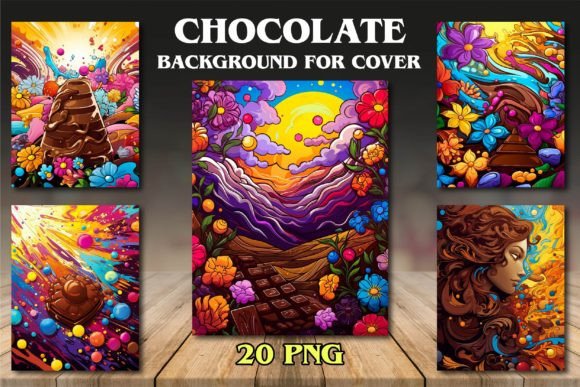
Rich Chocolate Backgrounds: Elevate Your Coloring Book Covers
There is a specific kind of satisfaction that comes from the aesthetic of chocolate. It suggests richness, comfort, and a tangible depth that is hard to replicate with standard digital patterns. When we talk about Chocolate Backgrounds for Covers, we aren't just discussing a brown color palette. We are looking at a design asset that mimics the swirling, organic textures of cocoa and confectionery to create an immediate emotional connection with the viewer. For self-publishers and designers working on Amazon KDP or print-on-demand projects, this visual language is invaluable. It transforms a standard coloring book into a sensory experience before the user even opens the file.
Visual Characteristics and Texture Appeal
The core personality of these backgrounds lies in their organic complexity. Unlike rigid geometric patterns, the Chocolate Backgrounds for Covers collection utilizes fluid forms. You will notice gradients that mimic the sheen of a ganache or the rough, matte finish of cocoa powder. This visual style creates a sense of depth that is crucial for cover design. A flat, single-color background often struggles to compete in a crowded marketplace like Amazon, but a textured background adds a layer of professionalism that signals value to potential buyers.
From a design terminology perspective, these assets function as a high-quality digital paper or texture overlay. The visual weight of the chocolate aesthetic grounds the layout. It provides a dark, rich canvas that makes lighter line art pop. For instance, if you are designing a coloring book for adults focusing on mindfulness or stress relief, the warmth of brown tones psychologically induces a feeling of calm and stability. This is not just decoration; it is a strategic use of color theory to enhance the user's state of mind.
Strategic Applications in Publishing and Branding
Where does this specific style work best? The versatility of the Chocolate Backgrounds for Covers extends far beyond just the front of a book. While the primary use case is the KDP Coloring Cover, creative professionals should consider the broader brand identity possibilities.
For a series of adult coloring books, using these backgrounds ensures visual consistency. A series needs to look cohesive on a digital shelf. By using the variations within this 20-pack collection, you can differentiate volumes (e.g., "Floral Edition," "Geometric Edition") while maintaining a unified "brand" feel that signals to returning customers that this is a product they already trust. This consistency is a cornerstone of professional editorial design.
- Web Design and Social Media: The high-resolution PNG files are perfect for social media graphics. The texture works exceptionally well as a background for Instagram posts or Facebook headers promoting the book launch. It avoids the sterile look of stock photos and adds an artisanal touch to your marketing materials.
- Packaging Design: If you move beyond digital sales to physical retail or special edition prints, these textures translate beautifully to packaging design. Imagine a belly band or a slipcase featuring these rich, swirling patterns. It elevates the product from a simple activity book to a premium gift item.
- Digital Printables: Beyond books, these files serve as excellent digital paper for crafters. Scrapbookers and hobbyists often look for unique textures for their projects, making this a viable secondary market for your designs.
Technical Specifications: The Importance of 300 DPI
As a designer or publisher, you know that a beautiful concept can be ruined by poor technical execution. The Chocolate Backgrounds for Covers collection is delivered at 300 DPI (dots per inch). This is the industry standard for high-quality printing. When you upload to KDP or send files to a commercial printer, 300 DPI ensures that the organic swirls and gradients remain crisp, not pixelated.
This technical quality influences readability and visual hierarchy. Because these are high-resolution PNG files, they support transparency. This allows you to layer your title typography and line art over the background without ugly white borders. The clarity of the image ensures that your text—whether you choose a sans serif font for a modern look or a script font for elegance—remains legible against the complex texture. If the background were low resolution, it would create visual noise that competes with your text, driving down the professionalism of the final product.
Pairing and Hierarchy: Making the Design Work
Choosing the right background is only half the battle; you must also evaluate how it fits with your typography and layout. The Chocolate Backgrounds for Covers provide a strong visual foundation, but you must manage the visual hierarchy to ensure the cover is effective.
Evaluating Project Fit: This collection is ideal for themes related to self-care, relaxation, indulgence, and nature (think trees, earth tones). If your coloring book is a high-energy, neon-themed activity for children, a chocolate background might feel heavy. However, for an adult coloring background focused on intricate designs, the richness of the texture complements the complexity of the art.
Font Pairing Strategies: The background acts as a display element. To maintain balance, pair it with clean typography.
- The Modern Contrast: Use a bold, geometric sans serif font for the title. The clean lines of the letters will contrast sharply with the organic, flowing nature of the chocolate texture, creating a dynamic tension that catches the eye.
- The Artistic Approach: If your book focuses on art therapy or creative expression, a fluid handwritten font or script font can work. However, you must ensure the font color is a stark white or a metallic gold to ensure it doesn't blend into the brown tones.
- The Minimalist Look: Use a standard serif font for a classic, bookstore-quality feel. This works well if the background is used sparingly or darkened to act as a vignette around the edges.
Practical Usage Tips for Creators
For the entrepreneur or small business owner, efficiency is key. Here is how to get the most out of this massive bundle design:
First, consider color grading. While the files are ready to use, don't be afraid to adjust the hue or saturation in your editing software. You can darken the chocolate backgrounds to near-black for a sophisticated, moody vibe, or lighten them to a milky beige for a softer, more whimsical feel. This allows you to create distinct looks for different books using the same asset pack.
Second, focus on contrast. Because chocolate textures are naturally complex, your central design needs breathing room. Leave "negative space" in your layout. Do not cover every inch of the background with illustrations. Let the texture be the frame that highlights the line art in the center.
Finally, remember the commercial licensing aspect. These assets are designed for you to use in products you sell. Whether you are creating a coloring book for girls, a stress reduction journal for professionals, or a fun coloring pages collection, you have the creative freedom to modify and incorporate these images into your final commercial product. This flexibility is essential for anyone building a sustainable brand on platforms like Amazon KDP.
In summary, the Chocolate Backgrounds for Covers offer more than just a pretty pattern. They provide a psychological cue of warmth and quality, backed by the technical specs (300 DPI, PNG) required for professional publishing. By integrating these textures thoughtfully, you bridge the gap between a digital file and a tactile experience, inviting your audience to relax, create, and engage with your work.